

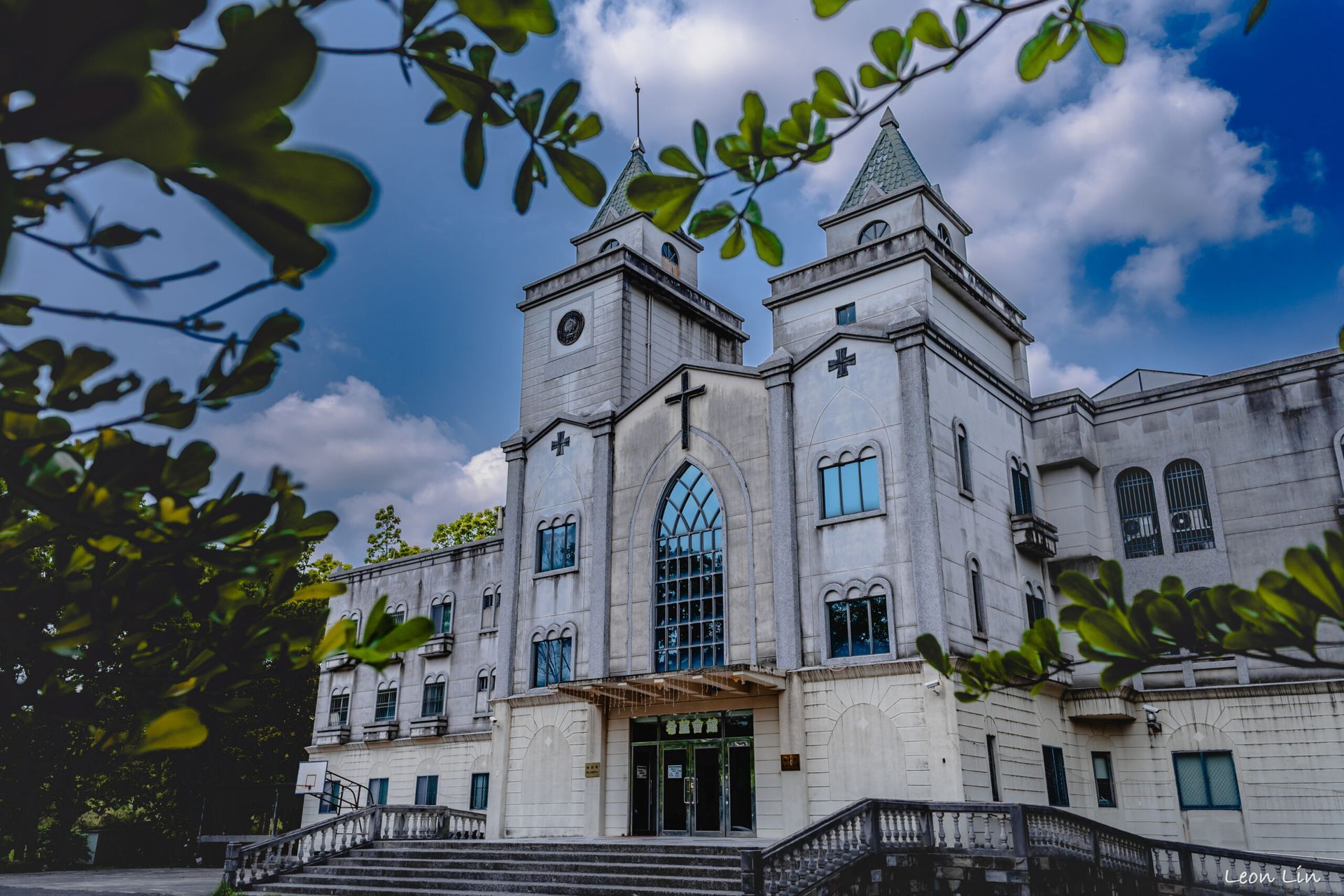
Historical Development
The Galilee Mission Center is located in the Sanpu area of Yujing, Tainan, Taiwan. This area is largely the ancestral homeland of the Siraya people and is also the earliest birthplace of missionary work in Taiwan. In the mid-16th century, the Dutch East India Company and the Dutch came to Taiwan to engage in trade and eventually colonize the island. The Dutch Reformed Church also began its missionary work in Taiwan at the same time. Their primary target group at that time was the indigenous people of Taiwan (the Siraya). The Dutch Reformed Church successively sent Geogius Candidus, Robertus Junius, and Jacobus Vertrecht to Taiwan to preach the gospel.
In the mid-1630s, Reverend Eurydice made great progress in his missionary work in the Siraya region, and many people came to believe in Jesus Christ. He felt there was a shortage of preachers and many pastoral workers. Therefore, he petitioned the East India Company and the Dutch Reformed Church. On March 10, 1657, the Minor Council of the Church of England suggested that "the clever and intelligent young men of Formosa, as well as the best-qualified Dutch soldiers, should be selected to receive theological and linguistic training so that they can serve as teachers or pastors to minister to their fellow countrymen."
Later, a resolution was passed to establish the first seminary in Xiaolong (Jiali), and in 1659, the first batch of students numbered as many as 30. While studying theology, they participated in evangelistic and pastoral work, reaping a great harvest of evangelistic fruits among the Siraya people. Three years later, due to Zheng Chenggong's attack on Taiyuan, the Dutch surrendered and withdrew. Under Zheng's persecution of the church, Xiaolong Theological Seminary was shut down.
Today, Galilee Missionary Theological Seminary was founded in Sanpu, Yujing. Most of the residents of this tribe are descendants of the Sirayas. Recalling that the Netherlands had been missionary in Dayuan for 400 years and then established the first seminary in Taiwan, this connection inspires our determination to embark on missionary work, which is of great significance.
In August 1987, Pastor Chen Kunsheng fasted and prayed at the Xiewei Camp in Puli, receiving a vision from God calling him to create a prayer mountain. By October, he had found the site for the current prayer house. God is faithful; He prepared this holy mountain for spiritual reflection and prayer. Elder Zhang Chungui of the Yujing Church once told Pastor Chen, the founder, that Christians lived in the Niuchouzai village of Sanpu, and that this land was the predecessor of the Yujing Church. It turns out that the site of the prayer house was the starting point for missionaries' missions in Yujing. God's work is truly wondrous, guiding the current camp to continue serving as a base for missionary spiritual reflection.
The existence of Galilee Missionary Theological Seminary today has a long historical origin. In April 1989, pastors of churches in Tainan City, such as Pastor Hong Wenrou of Minzu Road Church and Pastor Zhang Zonglong of Taipingjing Church, felt that pastors needed to serve in teams to improve the effectiveness of pastoral care. Therefore, they discussed establishing a southern branch of Hsinchu Bible College in Tainan City. With the support of Dean Wang Yingshi, enrollment began. Originally, it was planned to teach in Tainan City, but later, because the newly appointed Dean, Pastor Lin Ruilong, was unwilling to take on this work, theological education was moved to Yujing Galilee Prayer House.
On January 18, 1993, the Board of Directors of the Galilee Prayer House resolved to expand its ministry and rename it the "Galilee Missionary Center." In addition to the "Galilee Prayer House," it added the "Galilee Missionary College," bringing the total number of units to two. After years of operation, in June 2002, it was renamed the "Galilee Missionary Research Institute," recruiting college graduates to continue training missionary talent for the church. In April 2008, the Board of Directors accepted the Taiwan Pastoral Psychology Research Institute, founded by Dr. Tai Chun-nan, into the Center. Students from the Research Institute were then incorporated into the Master of Divinity program at the Taiwan Pastoral Psychology Research Institute. Graduates either assisted in pastoral work or independently developed churches. In April 2019, Dr. Tai Chun-nan passed away. After a year, his successor decided that the Pastoral Psychology Research Institute would separate from the Center and operate independently.
In April 2020, recognizing the importance of mission-oriented theological education, the Galilee mission theological seminary was established, offering Bachelor of Theology, Master of Mission, Master of Pastoral Studies, Doctor of Mission, and Doctor of Pastoral Studies programs. Enrollment was successful, and classes began in July. Later, on February 16, 2023, the administrative meeting confirmed the name change to "Galilee Graduate School of Mission and Theology," abbreviated as "Galilee Graduate School." The English name is Galilee Graduate School of Mission and Theology (GMT). A Master of Theology program was added to strengthen the training of pastoral and pioneering missionary talent. In September 2024, for ease of reference and consistency with other theological seminaries, the name was restored to "Galilee Graduate School of Mission and Theology."
In November 2023, our institute applied for accreditation from the Asian Theological Association (ATA) and was accepted as a member. We are currently actively preparing for accreditation and applying to become a certified member. This is another new milestone in the future development of our institute.
Historical Timeline
November 1991
The Galilee Prayer House Board of Directors discussed ministry cooperation with the Southern Branch Committee of the Bible College. They explored the possibility of developing ministry in Yujing, southern Galilee.
September 1992
As Dean Wang Ying-shih is about to retire and his successor has no interest in developing ministry in the south, the Southern Branch Committee and the Prayer House Board of Directors held a joint meeting to discuss how to promote training and prayer ministry together.
January 1993
The Southern Branch Committee and the Prayer House Board of Directors jointly discussed the establishment of the "Galeries Missionary Center Board of Directors" and elected Pastor Hsieh Ying-nan as Chairman.
July 1993
The Galilee Institute of Theology was established, with Dr. Wang Yangming appointed as its president, and the institute recruited theological students.
June 2002
The Galilee Evangelical Fellowship College has been renamed the Galilee Evangelical Fellowship Research Institute, and Dr. Hong Zhenhui has been appointed as its president. The institute is now recruiting master's students in Evangelical Fellowship.
August 2008
In collaboration with the Taiwan Institute of Pastoral Psychology, we recruit master's students in Taoism.
May 2010
The Taiwan Pastoral Psychology Research Institute was accepted as an affiliated institution of the Galilee Mission Center, and Dr. Tai Chun-nan was appointed as its director.
April 2020
The Taiwan Pastoral Psychology Research Institute has separated from Galilee and become independent.
July 2020
The Galilee Missionary Theological Seminary was established, and Dr. Hong Zhenhui was appointed as its president. It offers four programs: Doctor of Mission Studies, Doctor of Pastoral Studies, Master of Mission Studies, and Master of Pastoral Studies.
October 2022
It was renamed the Galilean Missionary Theological Institute and a Master of Theology program was added. Dr. Chen Kunsheng was appointed as the dean.
November 2023
I am applying to become a member of the Asian Theological Association (ATA).
September 2024
The name of the institution has been restored to "Galerian Mission Theological Seminary".
August 2025
The board of directors appointed Dr. Zhuang Yatang as the dean, who will take office in August.
December 2025
The board of directors appointed Dr. Zhuang Dongjie as the dean, who will take office in December.
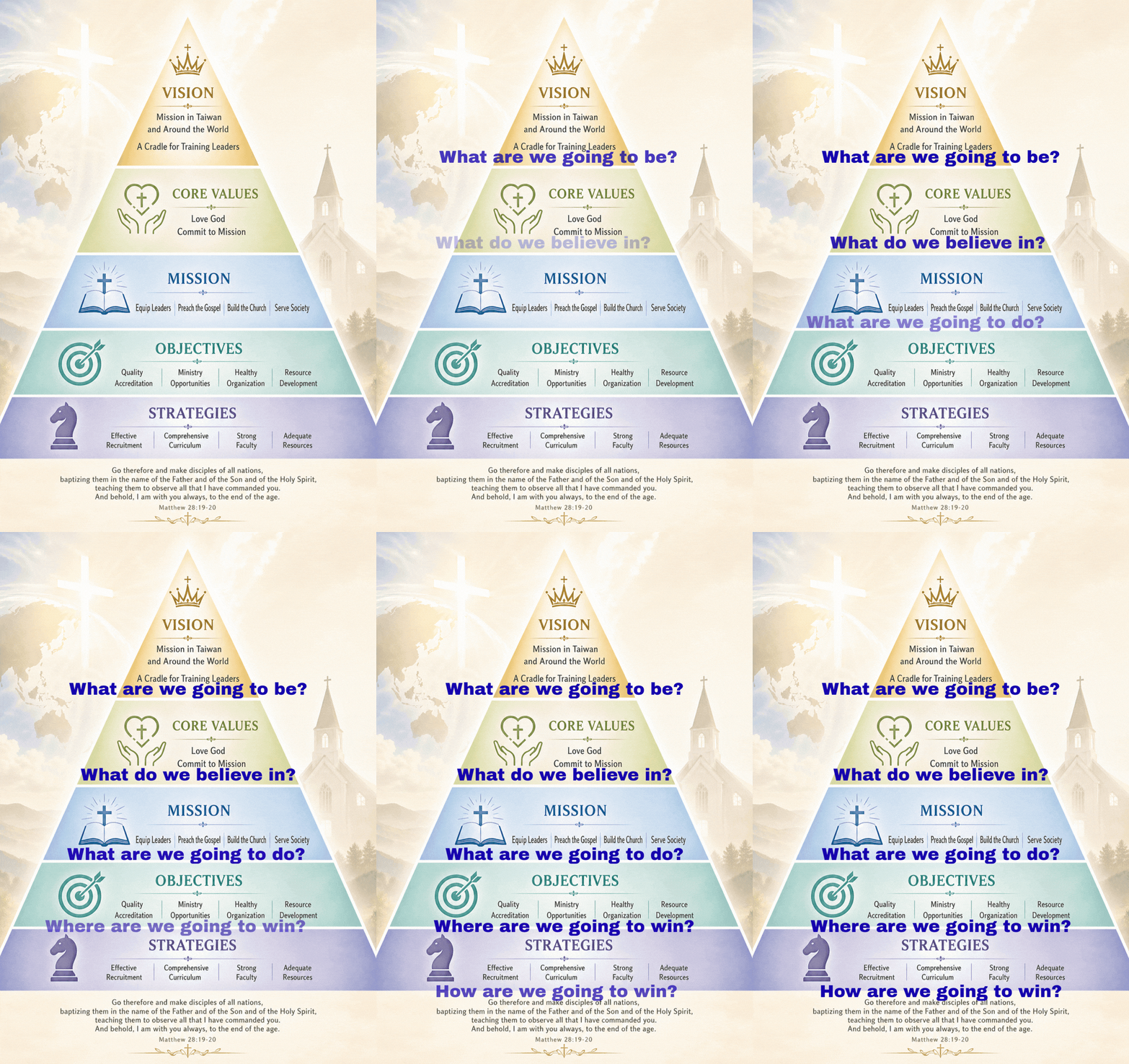
Vision Blueprint